
Tight hip flexors are one of the most common complaints among those who sit a lot, run, cycle, drive frequently or experience lower back stiffness. The hip flexors are a group of muscles at the front of the hip that help lift the thigh and bend the hip. They are active during walking, climbing stairs, sitting and many sports movements.
When people sit for long periods, the hips remain flexed. Over time, the front of the hips may feel stiff or shortened. However, “tight” does not always mean the muscle is physically short. Sometimes tightness is a sensation caused by weakness, fatigue, protective tension, poor pelvic control or lack of movement variety. This is why stretching alone does not always solve the problem.
A typical client may stretch the hip flexors every day, feel temporary relief, then notice the tightness returns by evening. This suggests that the body needs more than passive stretching. A better approach usually includes reducing prolonged sitting, strengthening the glutes and core, improving hip extension, and building strength through full ranges of motion.
The pelvis plays an important role. If the pelvis tips forward excessively, the hip flexors may feel constantly loaded or tight. Strengthening the glutes, hamstrings and deep abdominal muscles may help improve pelvic control. Exercises such as glute bridges, dead bugs, split squats and hip hinges can be useful when performed well.
A good hip flexor stretch should be controlled. The common half-kneeling stretch works well when the client gently tucks the pelvis under, squeezes the glute on the kneeling side and shifts forward slightly. Without the pelvic tuck, many people simply arch the lower back and miss the target. The stretch should be felt at the front of the hip, not as pinching in the lower back.
Strengthening the hip flexors themselves may also be needed. This surprises many clients. A muscle can feel tight because it is weak or easily fatigued. Controlled marching drills, resisted knee lifts or hanging knee raises may help some clients, especially athletes or runners, but these should be introduced carefully.
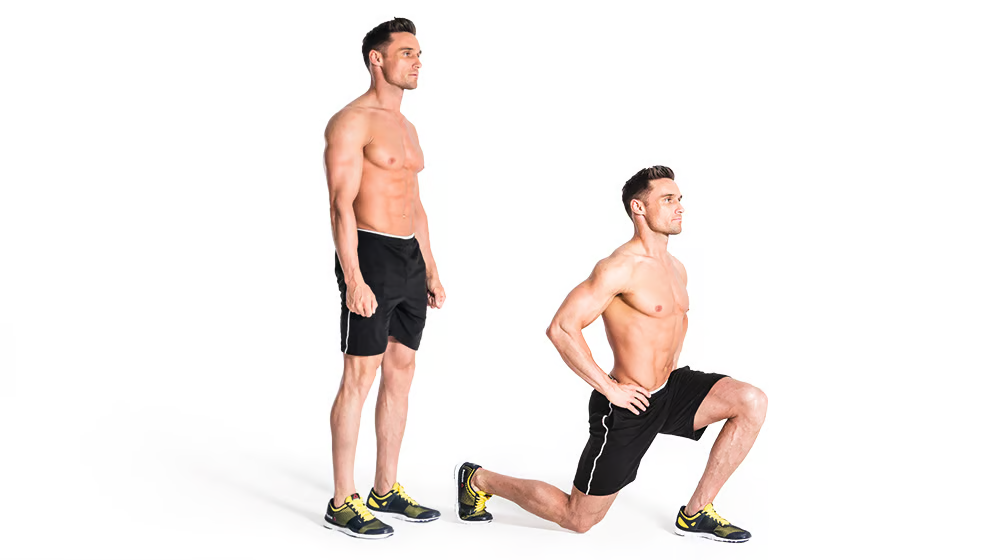
Daily movement is essential. Standing breaks, walking, stairs and gentle lunging patterns help the hips move through ranges they do not get while sitting. Clients should aim to change position often rather than searching for one perfect posture.
Tight hip flexors may also be linked with lower back discomfort, but they are rarely the only factor. Back pain is complex and can involve strength, stress, sleep, movement, sensitivity, workload and medical history. If pain is persistent, severe, radiating, or associated with numbness or weakness, professional assessment is important.
For most clients, improving hip flexor tightness is about combining mobility, strength and lifestyle. Stretching is useful, but it should be one part of a bigger plan. The goal is hips that feel mobile, strong and capable during real movement.
5-Step Action Plan
- Break up sitting: Stand or walk for 2–3 minutes every hour.
- Stretch correctly: Use a half-kneeling hip flexor stretch with a gentle pelvic tuck.
- Strengthen glutes: Perform bridges, split squats or step-ups twice weekly.
- Train control: Add dead bugs or core bracing drills to improve pelvic position.
- Move daily: Walk, use stairs or practise gentle lunges to restore hip movement.
Stay awesome and have a great weekend!
Vanessa x
P.S. Click here to hear what our awesome community have to say about our 21-day cleanse!